Independent Chinese science journalist Jane Qiu has been awarded the 2026 Sharon Begley Award for Science Reporting.
The award, established in 2021 by the Council for the Advancement of Science Writing, recognizes reporting and writing that embodies the high standards exemplified by science journalist Sharon Begley (1956–2021). The winner receives a $20,000 grant to support a significant reporting project, with a senior journalist serving as mentor.
“Like Sharon, Jane takes a wide-angle view of science news, with stories that touch upon climate science and the environment, geoscience, anthropology and science policy,” said Alan Boyle, chair of CASW’s awards committee and a past president of the council. “But from her vantage point in Beijing, Jane also zooms in on epidemiology and public health issues, including controversies surrounding the origins of infectious diseases.”
Qiu is the first international recipient of the Begley Award. In addition to serving as Nature’s Beijing correspondent for five years, she has also written for Science, STAT, Scientific American, MIT Technology Review, and Knowable. Her reporting has taken her to dozens of countries on all seven continents—and up to an elevation of 22,000 feet in the Himalayas.
The stories Qiu submitted for the judges’ consideration encompassed an impressive range of topics, including an in-depth investigation of the Covid-19 lab-leak controversy that centers on “China’s bat woman.” Other submissions delve into the risks posed by emerging bat-borne viruses, the role played by an American scientist in China’s “CRISPR babies” scandal, the ecological threat to Tibet’s grasslands, and the ethnic origins of Tibetans.
“There’s a fearlessness to Jane’s work, which is especially commendable given the immense difficulties of working as an independent science journalist in China,” said judge John Sutter, an independent filmmaker who won the 2023 Begley Award. “She masterfully combines an engaging writing voice with deep reporting on critical issues in science, including Covid-19. I find her brave and trailblazing journalism to be a powerful addition to the legacy of Sharon Begley.”
In recommending her for the award, Scientific American senior editor Josh Fischman highlighted Jane’s ability to tackle exceedingly complex topics with accuracy, nuance, and fairness, while bringing in voices often left out of media narratives. Her work is “a distinctive contribution to science journalism,” Fischman wrote in his letter. “I cannot overstate the significance of Jane’s reporting from and about China, using Chinese sources.”
Jane has received many of science journalism’s highest honors, including the Knight Science Journalism Fellowship at MIT, an Association of British Science Writers award for best feature, and two AAAS Kavli Science Journalism Awards, including in 2022 for her investigation of the lab-leak controversy.
“Jane is inquisitive, tenacious, and fiercely independent,” said judge Rich Stone, senior international correspondent for Science magazine, CASW board member, and Jane’s former editor. “I’ve always admired her intrepid spirit. Whether it’s high into the Himalayas or deep into Tibet, she will go to the ends of the Earth for a story.”
In addition to pursuing her own journalism, Qiu has shared her time and expertise with the science writing community. She has been a guest lecturer for journalism classes at MIT, Harvard, and Falmouth University in England. She serves on the steering committee of Globalance, a network of more than 80 freelance science journalists worldwide that was founded in 2020 with an emphasis on supporting journalists in the Global South. Qiu also frequently writes and speaks about topics including covering the pandemic, journalistic objectivity, and science communication. She has a doctoral degree in cancer genetics from the University of Glasgow in Scotland.
Jane’s grant will support a book project on emerging infectious diseases. Drawing on reporting from Asia, Africa, Australia, Europe, and North and South America—as well as journeys back in time—the book explores the origins of both diseases and ideas, revealing how social forces shape scientific paradigms, whose voices are heard, and how we prepare for and respond to pandemics. It is under contract with Scribner in the United States and William Collins in the United Kingdom, with publication expected in late 2028, shortly before the 10-year anniversary of Covid-19’s emergence.
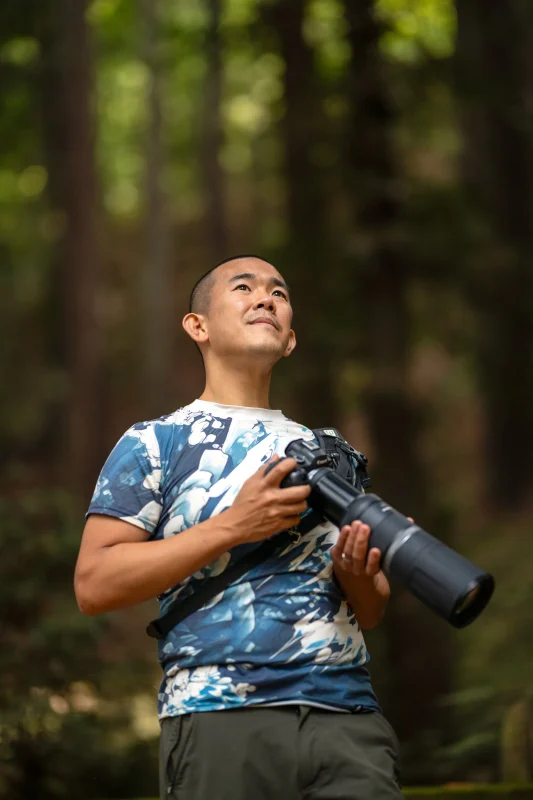
Pulitzer-winning science journalist Ed Yong, author of “An Immense World,” “I Contain Multitudes,” and the forthcoming “Life Beyond Measure,” will mentor Qiu.
“Jane is a brave, independent, and fearless reporter who has interrogated complex and difficult topics with authority through her dogged and rigorous reporting,” said judge Usha Lee McFarling, director of the Knight Science Journalism Program at MIT and winner of the 2024 Victor Cohn Prize for Excellence in Medical Science Reporting from CASW. “I think Sharon would approve of this choice.”
The judging panel for the fifth annual Sharon Begley Science Reporting Award was co-chaired by Boyle and Betsy Mason, a freelance science journalist and CASW board secretary. CASW President Richard Harris and Hannah Furfaro, a mental health reporter at The Seattle Times who won the 2024 Begley Award, joined McFarling, Stone, and Sutter on the panel.
The Sharon Begley Award was created by CASW in 2021 in collaboration with Sharon Begley’s husband, Ned Groth, a scientist, author, and environmental health consultant. It is supported by a dedicated fund established in Begley’s honor. At the time of her death in January 2021, Begley was the senior science writer at STAT, Boston Globe Media’s health and medicine news site, covering genetics, cancer, neuroscience, and other fields of basic biomedical research. Begley’s work was recognized posthumously when she was named a 2021 Pulitzer Prize finalist along with two STAT colleagues for early reporting on the Covid-19 pandemic. Among her many other awards were CASW’s Victor Cohn Prize in 2017 and an AAAS Kavli Science Journalism Award in 2019. STAT has also honored her by creating the Sharon Begley Science Reporting Fellowship.