Iran, new Russian weapons, Golden Dome: Expert briefs writers on nuclear threats
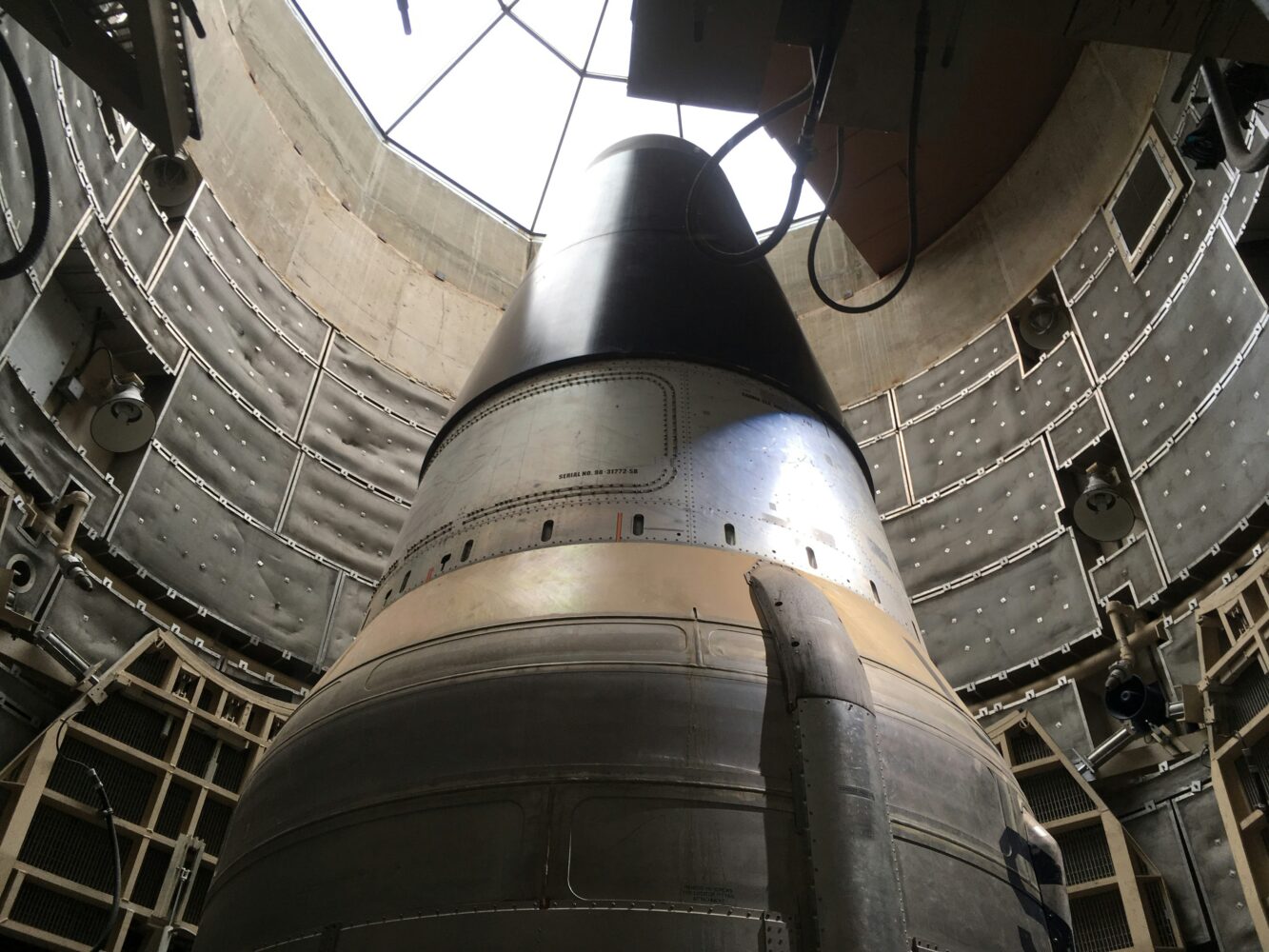
A decommissioned Titan II intercontinental ballistic missile is stored at the Titan Missile Museum in Arizona. (Photo by Stephen Cobb on Unsplash)
Other crises may have pushed nuclear weapons out of the spotlight in recent years, but MIT physicist and nuclear security expert Lisbeth Gronlund told attendees on Nov. 8 at the ScienceWriters2025 conference in Chicago that there are plenty of fresh reasons to worry about the nuclear threat.
During the Council for the Advancement of Science Writing’s New Horizons in Science briefing, Gronlund gave science writers an update on Iran’s nuclear program, Russian plans to develop weapons that can evade U.S .defense systems, and President Trump’s proposed Golden Dome missile defense system.
Nine countries are known to have nuclear weapons. Five of these countries—Russia, China, France, the United Kingdom and the United States—are sanctioned as nuclear weapons states under the 1970 Treaty on Non-Proliferation of Nuclear Weapons, more commonly known as the Nuclear Non-Proliferation Treaty (NPT).
The NPT stipulates that all other signatory countries may access nuclear power, but are prohibited from developing and possessing nuclear weapons. Four additional countries—Israel, India, North Korea and Pakistan—also possess nuclear weapons, but these “outlier” countries either did not sign the treaty or left it.
“When a [NPT] country has nuclear power, it’s monitored to verify they’re not turning it into nuclear weapons,” Gronlund said. “They’ll have on-site inspectors. They’ll have cameras. They do a really good job of verifying that these facilities are not then being used [to make nuclear weapons].”
Gronlund said the 2015 nuclear deal with Iran, the Joint Comprehensive Plan of Action, is crumbling. The restrictions on Iran’s nuclear program were “far, far more than any of the other states would have accepted,” she said. President Trump withdrew the United States from this agreement in 2018 and reimposed sanctions on Iran. While Iran initially continued to abide by the deal’s requirements, the country eventually restarted its efforts to enrich uranium. In November, Iran officially withdrew from a deal to resume inspections.
What comes next, Gronlund said, remains unclear, as tensions continue to rise between the United States, Iran and Israel. “It’s really unfortunate, because it was a really, really good deal,” she said.
Other emerging nuclear threats include Russian weapons designed to evade U.S. defense systems. Newly unveiled nuclear underwater drones are particularly frightening to the public, Gronlund said, because they have the capability to destroy coastal cities. Also included in this new arsenal are long-range hypersonic weapons—a name that sounds sinister but isn’t, according to Gronlund. Intercontinental Ballistic Missiles (ICBMs) are already hypersonic, she said, so this new weapon is likely a way for a warhead to fly lower and evade countermeasures.
Meanwhile, the Trump administration has proposed developing the Golden Dome, a missile defense system it claims can be built for $175 billion and deployed in three years. An independent cost estimate, however, says this technology would more likely cost at least $1 trillion, an amount Gronlund doubts Congress would approve.
“We need to also be sure that we elect people into office who are knowledgeable and understand the consequences of using these weapons,” said international security expert and session moderator Kennette Benedict, who is currently senior advisor to The Bulletin of the Atomic Scientists.
The public, however, is not very aware of these new nuclear threats. For socially conscious young adults who didn’t live through events like the Cuban Missile Crisis or the Vietnam War, other challenges are more prominent. Gronlund said her own 30-year-old daughter is more concerned about the impacts of climate change and artificial intelligence than of nuclear weapons.
Despite the lack of concern, the consequences of using nuclear weapons will affect everyone in a myriad of ways, from health outcomes to the food supply. “You don’t need to understand the physics,” she said, to care about disarmament.