Seven journalists awarded fellowships to study science writing
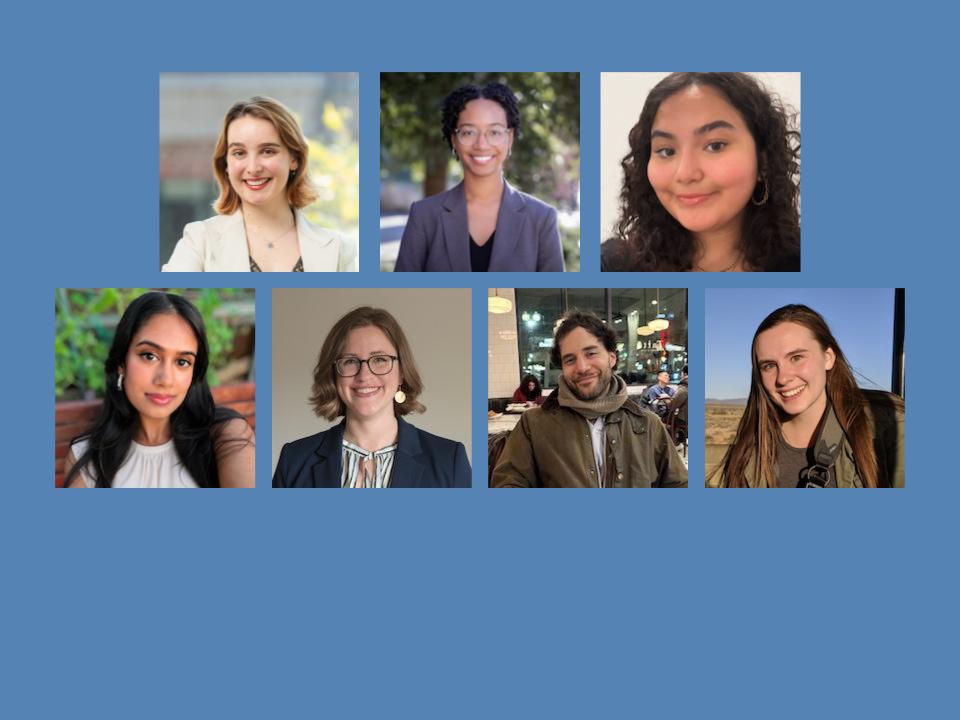
The 2026-’27 Taylor/Blakeslee Graduate Fellows are (clockwise from top left) Aspen Stuart-Cunningham, Cameron Glymph, Emely Bonilla, Jenna Lang, Jesse Steinmetz, Kelsey Woody and Sruthi Gurudev. (Images provided by fellows)
Seven journalists who’ve covered science and the environment across the country are headed to graduate programs in science journalism aided by Taylor/Blakeslee Graduate Fellowships from the Council for the Advancement of Science Writing for the 2026-2027 academic year. Each fellow will receive $6,000 to support their studies, thanks to funding from The Brinson Foundation.
One fellow, Kelsey Woody, will receive an enhanced fellowship designed to encourage coverage of the physical sciences, such as chemistry, physics, and math. Woody’s award includes mentorship from a senior journalist with experience covering the physical sciences and up to $3,500 in travel funding to deepen her ability to report on these subjects, funded by The Brinson Foundation. Past mentors include Kenneth Chang, Dennis Overbye and Natalie Wolchover.
“I’m deeply grateful to be awarded the CASW physical sciences fellowship,” Woody said. “Access to independent funding to pursue stories that excite me is a rare opportunity—especially this early in my career as a journalist. With the fellowship, I intend to write pieces that combat misinformation, humanize scientists and provide glimpses into the vibrant body of research that underpins our daily lives. I’m truly humbled by the support, and I can’t wait to dive into the work.”
The seven fellows were chosen from an exceedingly competitive pool of more than 30 applicants. Their selection brings the total number of science writers aided by CASW’s graduate fellowships to 212.
“I was heartened by the passion and the professionalism that came through in this year’s applications for the fellowships,” said Alan Boyle, chair of CASW’s Awards and Fellowships Committee. “Hearing about the fellows’ life stories and seeing the work that they’ve done at this early stage of their careers is a great antidote for the angst that science journalists can sometimes feel in this uncertain age.”
Here are the seven fellows for 2026-2027:
 Cameron Glymph will attend MIT’s Graduate Program in Science Writing, with an interest in intersectional environmental issues and science journalism. Previously, she was a correspondent for Planet Forward, where she wrote solutions-oriented climate change stories, and was a freelance contributor to the Florida Student News Watch, where she wrote about climate change, environmental policy and housing issues. She is a recent alum of Florida State University, where she earned her bachelor’s degree in English and edited the FSView & Florida Flambeau, the independent news service for the Florida State community. At MIT, Glymph aims to deepen her understanding of environmental, science and technology issues to bridge gaps in understanding and motivate community-oriented solutions.
 Sruthi Gurudev will attend MIT’s Graduate Program in Science Writing. She is a science journalist covering the environment, wildlife, marine science and natural history. Her reporting has focused on stories ranging from whale falls and hatching squid to snake zoonoses and disappearing ecosystems. Her work appears in National Geographic, The New York Times and Mongabay. Sruthi is a National Geographic Explorer and a 2025 Uproot Fellow. Her reporting often centers on making complex and difficult-to-observe ecological systems more accessible through storytelling. At MIT, she hopes to deepen her reporting skills and place science within broader contexts, including economics, livelihoods and the human relationship to nature. She is particularly interested in narrative features that explore the people and systems shaping the natural world.
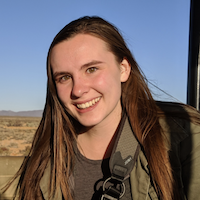 Jenna Lang writes stories to help people connect with the natural world. She grew up in Boston and studied psychology at Harvard College. While working in public health research, she discovered the field of science communication. Now, she feels lucky to learn more about the world every day. For the past five years, Jenna worked at an exhibit media company, writing for museums, science centers and historic sites. She loved the challenges of digging through archival sources and translating expert information for a public audience. Jenna will be joining the MIT Science Writing program and hopes to write stories that spread wonder, curiosity and a passion for making our world a bit better for all its inhabitants.
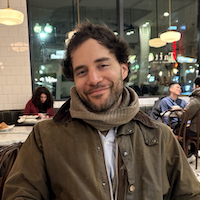 Jesse Steinmetz will attend MIT’s graduate program in science writing. He is a reporter and public radio producer based in Massachusetts and has worked as a producer for NPR stations in Hartford, Charlotte and Boston. In 2025 he was awarded a fellowship from the National Press Foundation, and his writing has been published in Forbes, Live Science and Inc. Magazine, among other outlets. He has two bachelor’s degrees, one from Hampshire College where he studied English and Spanish, and a second from Eastern Connecticut State University, where he studied music. At MIT, he plans to hone in on investigative science reporting and learn how to effectively hold power to account.
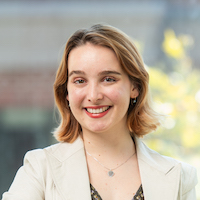 Aspen Stuart-Cunningham is a science communicator whose love for physics and understanding her world has transformed into a passion for telling stories that weave together the joy of discovery with the importance of science. Aspen graduated from Stanford with her bachelor’s degree in physics and a special focus in science communication, followed by a science writing internship at Fermi National Accelerator Laboratory and Symmetry Magazine. Aspen has been working at Brown University’s Data Science Institute as a communications coordinator. She will attend the UC Santa Cruz science communication master’s program. In telling the stories of scientists, students and advocates, Aspen hopes to make science understandable, scientists relatable and the process through which science progresses accessible and human.
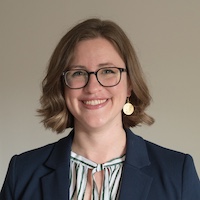 Kelsey Woody is a fifth-year doctoral candidate in Earth & Planetary Sciences at Washington University in St. Louis. In her current work, she extracts rare gases from volcanic rocks and ancient seafloor oozes to investigate how gases have moved through the Earth over time. During her career as a researcher, she has sought out any opportunity to communicate Earth science, from explaining the cosmic origins of iron through American Public Media to spotlighting the oldest known Appalachian freshwater fish in The Angler Magazine. She will attend the UC Santa Cruz science communication program, where she aims to hone her skills as a science journalist and write pieces that make abstract scientific topics engaging and accessible.