How journalists can help the public separate fact from fiction in the MAHA movement
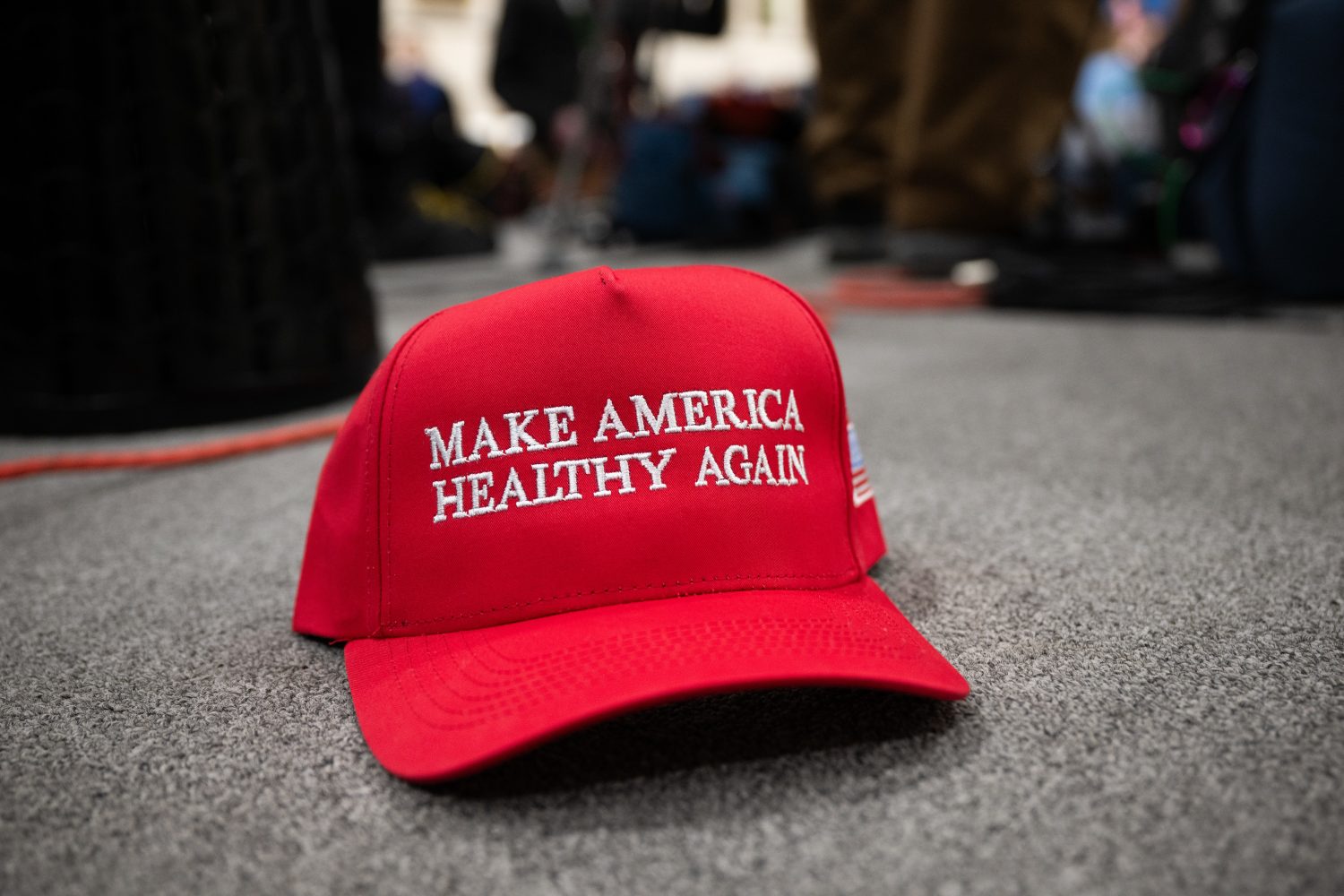
Trump’s signature red cap emblazoned with Make America Healthy Again, a campaign central to his second administration. (Photo by Christophe Paul, Public Domain image, US Department of Agriculture, via Flickr)
One of the most visible figures in the second Trump administration is Robert F. Kennedy Jr., a vaccine skeptic appointed as Secretary of Health and Human Services. Kennedy has made sweeping changes to the country’s public health system — including slashing federal childhood vaccine recommendations and cutting funding for thousands of clinical trials — under the banner of his Make America Healthy Again (MAHA) agenda.
A panel of journalists and health experts at the recent ScienceWriters2026 conference explored flaws and contradictions within the MAHA movement, as well as the challenges journalists have faced as Kennedy’s campaign to “reform America’s food, health, and scientific systems to identify the root causes of the chronic disease epidemic,” as stated in Trump’s 2025 executive order, has played out in federal policy and action. The panel was part of the Council for the Advancement of Science Writing’s New Horizons in Science briefings at the conference in Corvallis, Ore., Sept. 27.
The MAHA movement, panelists said, has galvanized support across the country in part by capitalizing on existing health inequalities and failures of the healthcare system. For instance, while obesity rates and chronic disease prevalence have skyrocketed, regulation of major food systems and companies has been limited.
“I think you are seeing a lot, in MAHA, this bubbling up of people’s frustrations,” said panelist Kevin Klatt, assistant professor of nutritional sciences at the University of Toronto.
“The whole public feels frustrated that we don’t know what to eat,” said Klatt, pointing to gaps in scientific knowledge as well as citing “clickbait headlines” offering nutrition misinformation. His research has found that many of the nutrition guidelines used in the U.S. and Canada were based in part on studies that excluded women.
Recent polling suggests that about four in 10 Americans support the MAHA movement, but many of their ideas about it seem out of step with the administration’s aims. For example, while four in 10 say that lowering the cost of health care and prescription drugs is their biggest priority, only half of that number say their main priority is restricting chemical additives in the food supply, one of Kennedy’s stated goals.
The MAHA movement is “at its heart, a brilliant marketing ploy,” said freelance journalist Tara Haelle, organizer of the panel. “I see this giant smoke screen because when you look deeper at it, you’ll see that there are disconnects between what stated MAHA adherents say they want and what the actual people in charge are trying to work on or say they’re doing.”
It’s clear that many Americans have serious concerns about the healthcare system’s ability to support them and their families. “There’s a lot of people who are being harmed by the false promises that have come out of this administration,” said Klatt. He argues that it is crucial for science journalists to go out into the community and connect with these people, from the mother whose daughter has measles to the parents who felt “hung out to dry” by Kennedy’s promise that children with autism would have easier access to leucovorin, a substance that was shown a few months later to have no effect on the condition.
All the panelists said they would like to see more journalists explicitly discuss how the MAHA movement has contributed to current health care challenges, such as how the cyclospora outbreak was worsened by cuts to food safety programs at the Food and Drug Administration (FDA). “You’ll use ‘Kennedy’, you’ll use ‘anti-vaccine’, you’ll use all these other things, but I’m not seeing the word ‘MAHA’ in that story,” said Haelle.
Jeremy Faust, assistant professor of emergency medicine at Harvard Medical School, said during the briefing that he would like to see more journalists acknowledge the health risk factors that the MAHA movement does not incorporate. “The one thing that’s killing kids is the one thing they won’t touch: firearms,” he said.
As reporters continue to cover the MAHA movement, the panelists hope that journalism acknowledges the challenges people face navigating the health care system, while using evidence and personal stories to highlight that MAHA is not making Americans healthier.
“We [scientists] are trying, and we screw up all the time,” Klatt said. “But I wish that the people who benefit from our screw-ups actually were held to the same account that we are.”