MAHA in the media: Are science journalists meeting the challenge?
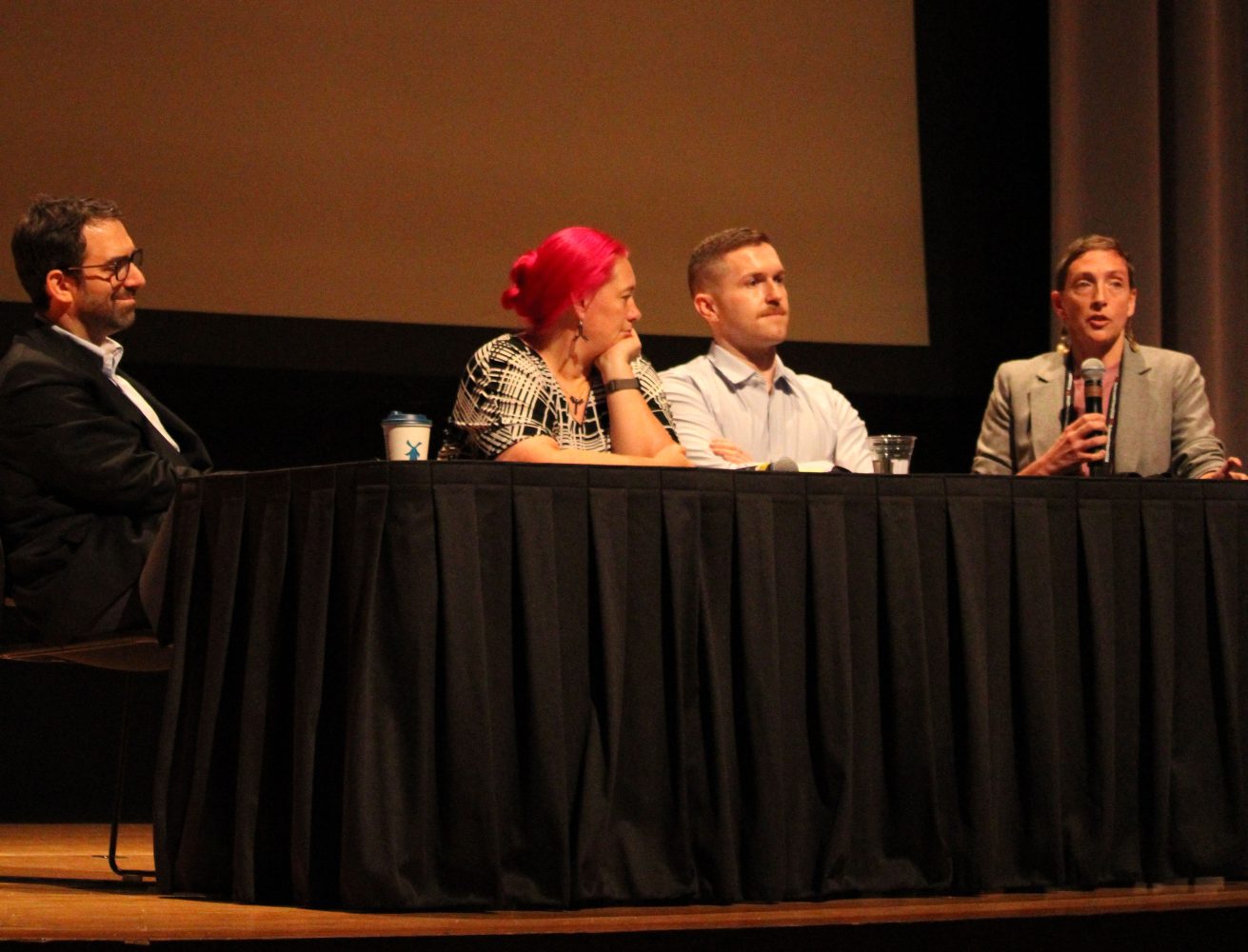
Panelists Jeremy Faust, Tara Haelle, Kevin Klatt and moderator Celeste LeCompte (shown left to right) talking at the New Horizons plenary briefing. (Photo by Matias Dominguez)
When asked to define Make America Healthy Again (MAHA), three health experts addressing science writers at a recent conference chose vastly different words. Nutritionist Kevin Klatt termed MAHA a “conglomerate.” Health journalist Tara Haelle described it as a “genius marketing brand.” Emergency physician and medical writer Jeremy Faust called it an “anti-scientific, anti-vaccine grifter movement.”
According to the U.S. Department of Health and Human Services (HHS), MAHA is none of these; it’s an agenda aimed at improving dietary guidelines and children’s health while addressing an autism epidemic, overprescription of psychiatric medications, and the high price of drugs in the United States. Following the lead of HHS Secretary Robert F. Kennedy Jr., 42 states have implemented MAHA-related legislation since 2025.
Klatt, Haelle, and Faust worry that the large umbrella seemingly covered by MAHA may be muddying its true ambitions—and media coverage of its public health outcomes.
The trio discussed the MAHA movement during the Council for the Advancement of Science Writing’s New Horizons in Science briefing at the ScienceWriters2026 conference at Oregon State University, Ore., Sept. 27.
Haelle, who has covered medical research and infectious disease over much of her three-decade career, faulted the media for failing to highlight the roots of Kennedy’s movement: a once-fringe anti-vaccine sentiment which his ascent has brought into the mainstream.
“The problem with attacking vaccination is that you’re attacking the norms, so that even people who think they support vaccines will start to have doubts even if they don’t realize it,” Haelle said.
According to an October 2025 KFF/Washington Post poll, only 9% of MAHA-supporting parents see themselves as anti-vaccine, while 55% percent identify as somewhere in the middle. However, 56% of MAHA supporters trust Kennedy to provide reliable information on vaccines.
Haelle said the MAHA movement rode the wave of public health interest catalyzed by the COVID-19 pandemic. However, instead of supporting public engagement with federal organizations like the CDC and FDA, MAHA leaders minimize their public outreach—including how much journalists like her can get in touch with government representatives.
“Do I see more engagement with the public health infrastructure? No, because the whole MAHA movement is a reaction against the public health institutions, which is part of the problem,” she said.
As 4 in 10 Americans say they support MAHA, Haelle worries that news outlets may be using “false balance”—the practice of covering a scientific question as a debate, when in fact the issue is settled—including writing misleading headlines. For example, she cited a recent National Public Radio headline, “Latest CDC report on youth behavior has some good news — and MAHA vibes,” might be read as crediting MAHA with improving teen health outcomes, instead of addressing the report’s striking omission of data on substance abuse, violence, racial and ethnic disparities, and LGBTQ+ youth.
“We don’t want to alienate [MAHA] people, and yet in doing that, are we making a deal with the devil?” Haelle said. “I don’t have a good answer for that because I recognize pressures of [media] commercialization and not wanting to isolate people.”
With only 36% of Americans reading mainstream news on a regular basis, and even fewer getting information from science-focused platforms, the panelists urged science journalists to further integrate their reporting into both mainstream sources and smaller community groups on social media platforms like Facebook.
Haelle and Klatt urged journalists to cover the stories of individuals harmed by the administration’s false promises, and not to sacrifice this more personal reporting while managing the barrage of news.
Klatt is familiar with this challenge; when the administration promoted leucovorin as a potential treatment for autism in children in March 2026, he saw an immediate reaction from curious press and hopeful parents.
“I have people in my DMs still to this day asking me if the leucovorin evidence has evolved,’” Klatt said. “The government has really abandoned people on this after making a huge promise.”
Haelle noted that stories about policy, including healthcare cost increases and food safety recalls, don’t appropriately attribute government actions and their wider outcomes to the MAHA agenda.
“We’re not connecting the dots for people, and I think we need to start connecting the dots,” Haelle said.
While the panelists empathized with the difficulties journalists have in covering the broad and often amorphous topic of MAHA, they spoke with urgency regarding the need for a stronger and wider-reaching press. On her “report card,” Haelle gave science media a “B to B- overall” on MAHA coverage—with an A- for autism coverage, A+ for vaccines, A- for food and deductions for uncovered topics. She gave the general media a “C-.” Faust, on the other hand, gave journalists an “I for incomplete.”