The other side of wildfire: ‘Good fire’ in the Pacific Northwest
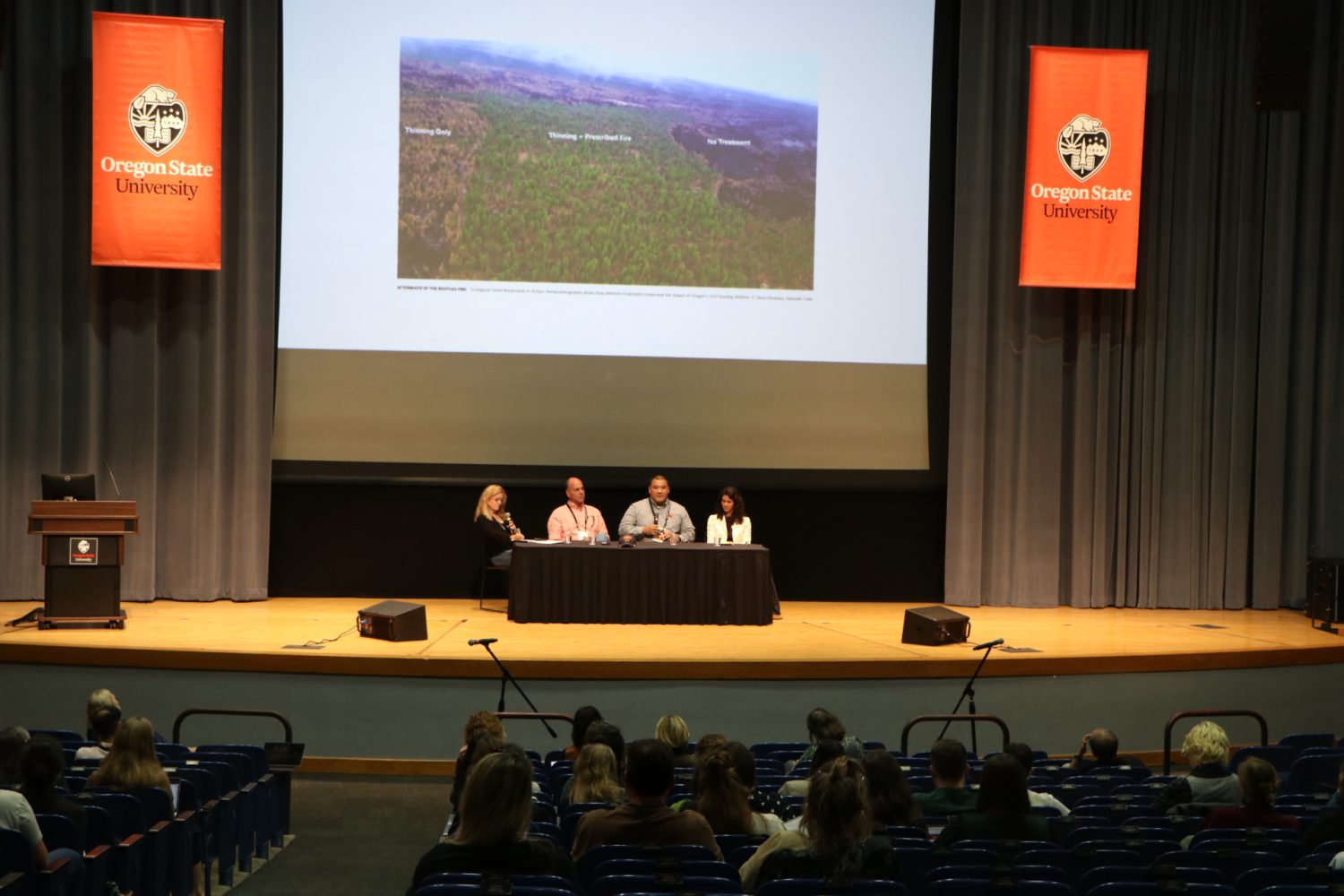
Experts John Bailey, professor at Oregon State University (second from left), Glenn Jones, graduate student at Oregon State University (middle) and Lauren Ponisio, assistant professor at University of Oregon (right) are interviewed by Michelle Nijhuis, contributing editor at High Country News, during the ScienceWriters2026 conference in Corvallis, Ore. (Photo by tanka dhakal)
Glenn Jones regards fire as an integral part of his life.
“I look at fire more as a relative, [rather] than an adversary,” Jones, a member of the Hoopa Valley Tribe and a master’s student in environmental engineering at Oregon State University, said during the Council for the Advancement of Science Writing’s New Horizons in Science briefing at the ScienceWriters2026 conference in Corvallis, Ore., on Sept. 27.
“So, it’s something that is not only important to the landscape; it’s important to me as an Indigenous person. It’s woven into my DNA,” said Jones.
At the time of the conference, Oregon, Washington state, and British Columbia had been battling wildfires for more than two months. The two U.S. states were experiencing their worst fire season in decades; as of the third week of September, at least 3,489 wildfire incidents had been recorded, and more than 3.4 million acres had already burned.
During the session, experts in environmental engineering and the intersection of biology, food, and Indigenous knowledge discussed wildfires in the Pacific Northwest. They stressed the importance of fire and the need to bring scientific and cultural perspectives together to create a common understanding and inform fire management strategies in the region.
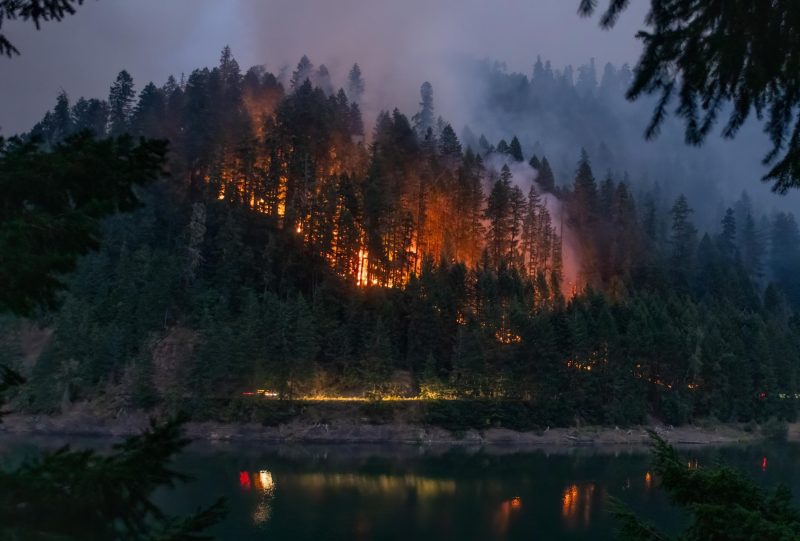
John Bailey, professor of forest engineering, resources, and management at Oregon State University and an expert in sustainable forest management and wildland fire science, said well-managed fire – or “good fire” – can be ecologically beneficial and can reduce ground fuel for future wildfires.
“Even the large wildfires have areas that burn within those perimeters that do ecological good, that aren’t destroying homes, aren’t destroying habitat, are creating habitat for pollinators, are resetting the forest, are reducing the fuel risk,” Bailey said.
Jones, who spent 15 years as a wildland firefighter and recently became the first Indigenous burn manager in Oregon, distinguished between the concepts of cultural and prescribed fire.
Cultural fire refers to the intentional and controlled use of fire by Indigenous communities. The practice leverages traditional, place-specific knowledge and relationships to promote biodiversity and achieve cultural goals connected to the Indigenous people living in the area.
Prescribed fire is also a controlled fire, but it typically follows formal burn plans and fuel-reduction goals and is conducted in collaboration with local or Indigenous communities and fire experts.
“We’re in a time right now where cultural fire is really gaining traction, but also with that traction, it’s very important that we define the terms and not blur the lines between prescribed fire and cultural fire,” Jones said.
“I love our [cultural] fire suppression. I value it. I know that we need it, especially in the time that we’re in right now,” Jones said.
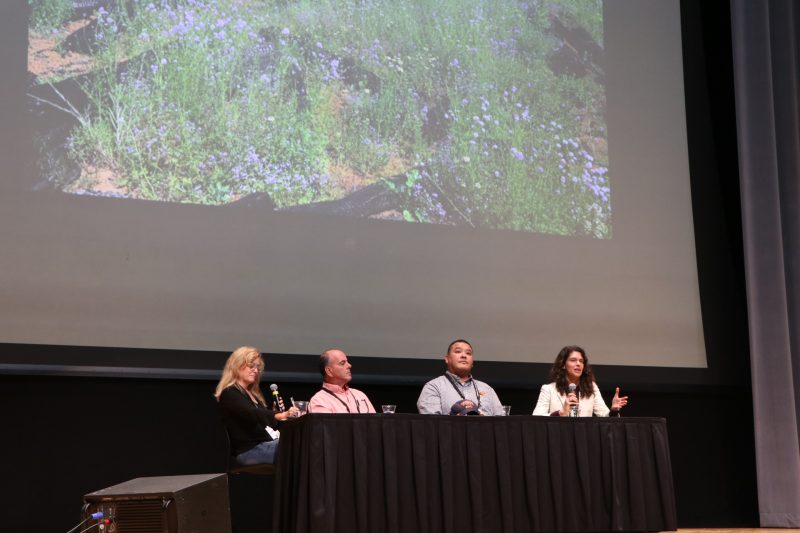
Lauren Ponisio, an assistant professor at the University of Oregon who studies bees and their roles as pollinators, noted that bees benefit from the open, flower-rich habitats that emerge after fires.
Mixed-severity fires support broader biodiversity, said Ponisio. Their heterogeneity provides “lots of different resources for not just bees, but other early seral or early successional wildlife that likes a stage where the trees are smaller or just not fully mature and allows sunlight to reach the ground.”
However, the panelists noted that wildfires are becoming more destructive and creating obstacles to implementing good fire practices in the Pacific Northwest. For example, wildfire smoke is a major hazard for people living in wildfire-vulnerable areas. It can cause asthma attacks, coughing, difficulty breathing, and chest pain, according to the Centers for Disease Control and Prevention. These health concerns may impede the implementation of good fire management practices, said Bailey.
As increasingly destructive wildfires threaten both biodiversity and public health, “we need, in the time that we’re in now, to definitely appreciate mechanical treatments paired with prescribed fire treatments,” Jones said.